

This article provides an introduction to the terminology and principles of BIM. It also highlights the key expectations and goals associated with this "new" way of working, while examining the limitations of the promise of seamless, interdisciplinary collaboration.
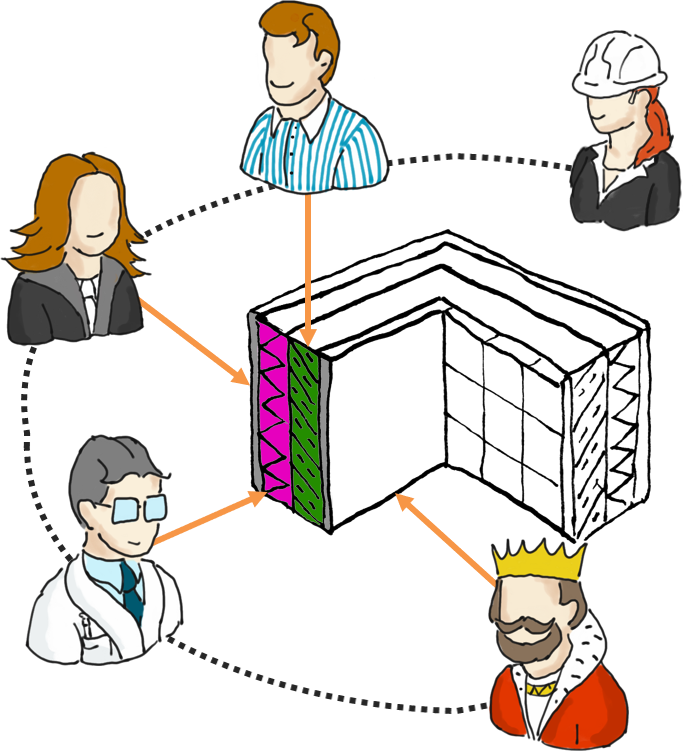
BIM has various stages of development and levels of application, each offering different opportunities for interdisciplinary collaboration in construction planning, execution, and operation. It is only at Level 3 that we can truly speak of integrated, BIM-supported planning.
The term "Building Information Modeling," coined by Autodesk, has gradually supplanted existing terminology as it has gained widespread adoption and has ultimately become the standard. The principle behind BIM, however, is significantly older than the term itself—it’s just that over the past 30 years or so, every software manufacturer has referred to it differently. Nemetschek, for example, spoke of “Round Cycle Engineering,” Bentley of “Integrated Project Models,” and Graphisoft of “Virtual Building Models.”
However, the underlying principle is the same across all software approaches: the goal is to create single-object-based, data-rich 3D building models.
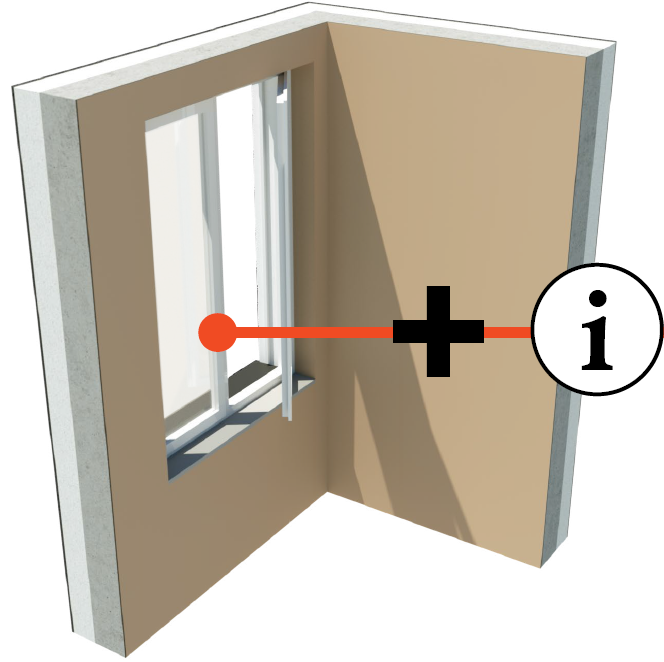
Virtual objects such as walls, windows, or columns are assigned alphanumeric information that describes their characteristics. In addition to physical properties such as building materials, structural behavior, thermal properties, etc., any number of additional pieces of information can be defined for each element.
Incidentally, some of the information stored in the virtual components is considered so important that it is referred to as "planning dimensions"—data on time (4D), cost (5D), and sustainability (6D). Ultimately, however, this information is also just individual characteristics of the virtual components.
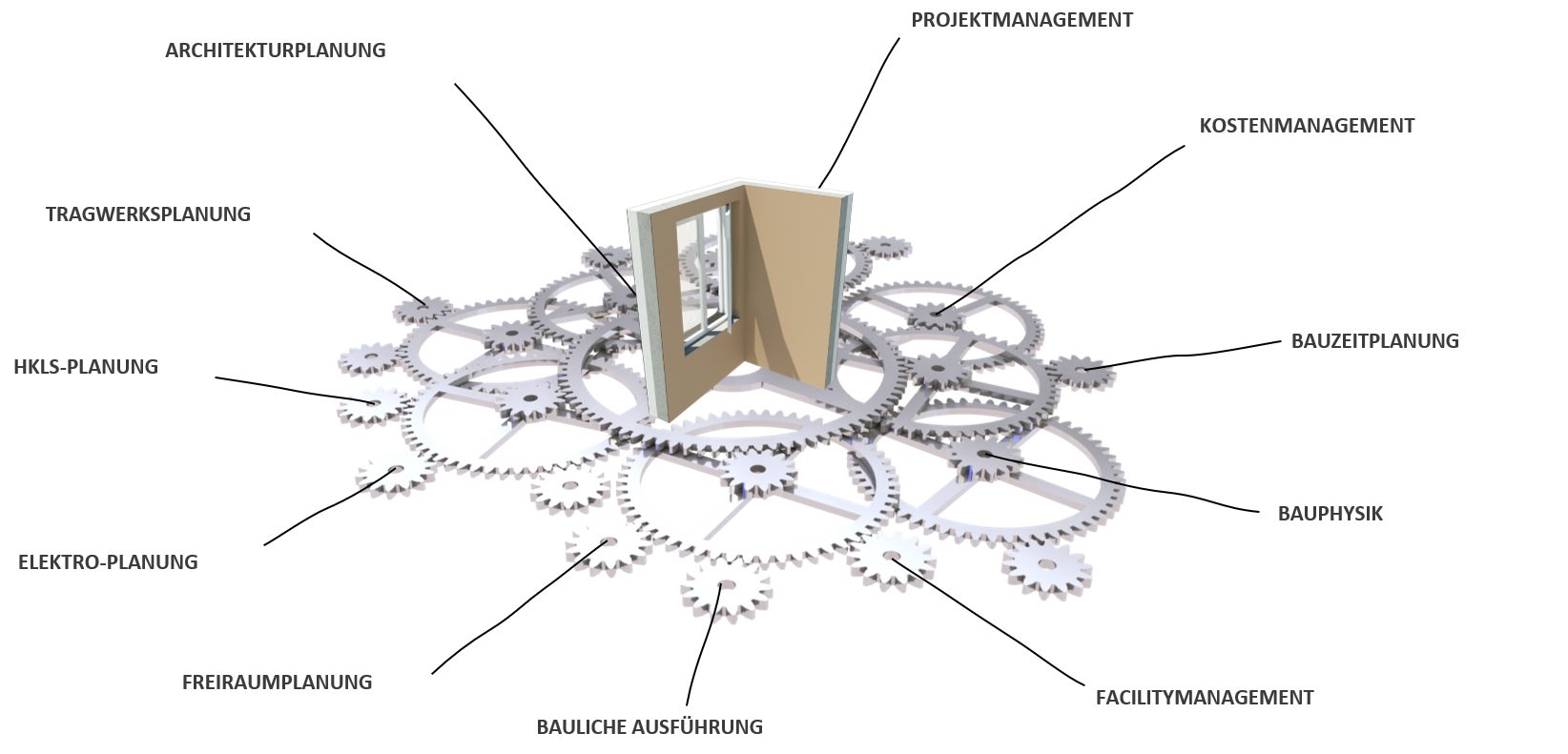
The hope is that this principle will cover all use cases in planning, execution, and operation—from the creation of planning documents, through analyses and lists, to calculations in structural engineering, building physics, and building services engineering, all the way to the data environment of facility management.
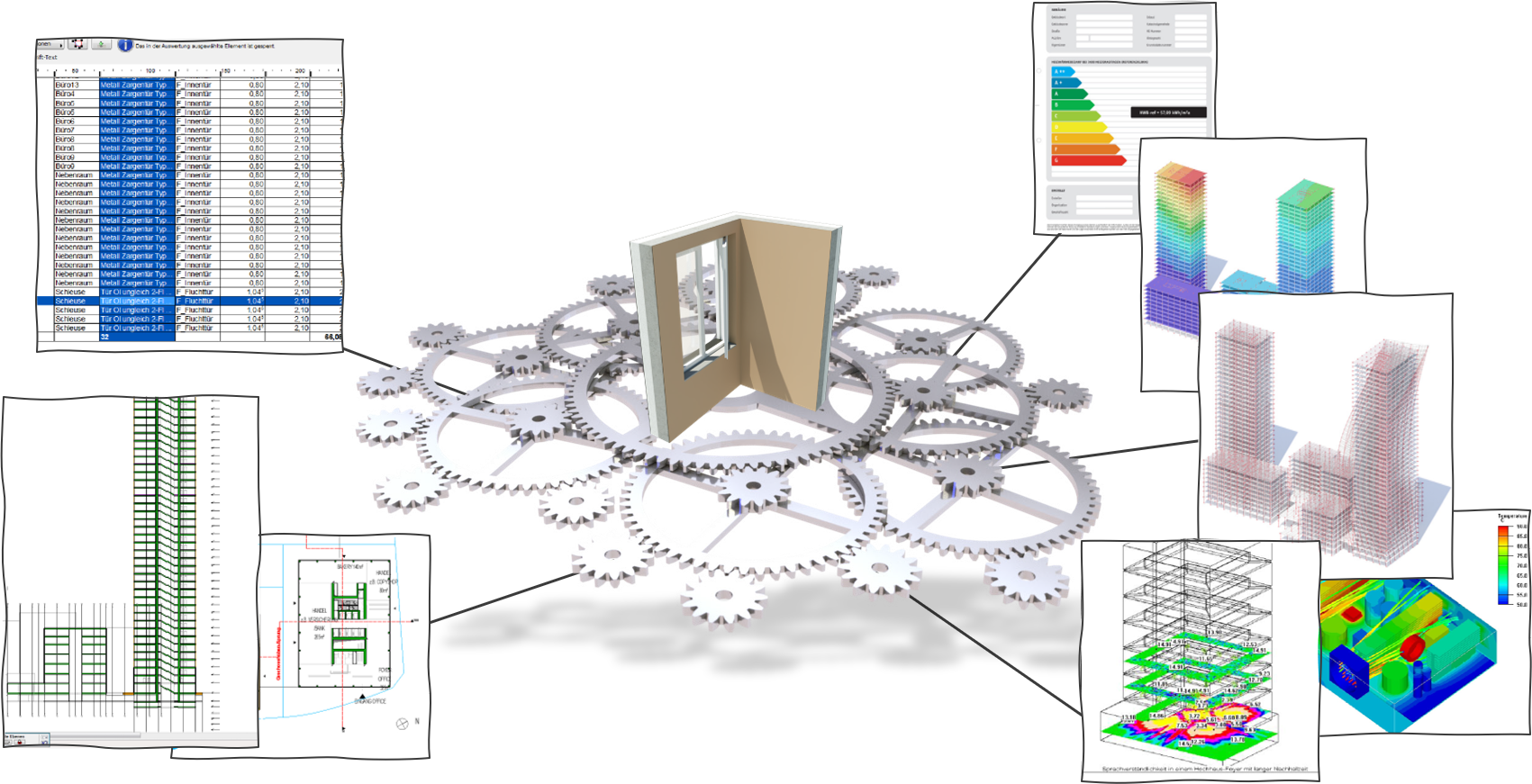
Why does this remain a hope? To this day, only in very few tool configurations has it been possible to establish a truly seamless data chain across all phases of a building’s life cycle and all disciplines involved. As will be explained in more detail later in this article, this is due in no small part to the fact that data formats such as IFC do not convey all the necessary information about virtual building components, which inevitably results in data loss.
It can certainly be said that the overarching goal is for the element-based approach to finally bring about (more) centralized information management among the diverse disciplines involved in construction. To put it another way: The document-based methods that other industries, such as mechanical engineering, abandoned decades ago have long since reached their limits and have long been unable to adequately address the complex coordination of the technical, environmental, and economic considerations involved in constructing a building.
The basic principle of Building Information Modeling can be described quite simply using the following formula:

Building Information Models consist of a given number (n) of 3D elements, to which a set of information (i) is assigned for each life cycle phase (t). This formula applies uniformly to all disciplines involved in construction.
However, upon closer inspection, it quickly becomes clear that this formula is missing a crucial element: the geometry of a virtual component (such as a window) and its attributes and parameters are simply not enough to make it fully functional: Ultimately, every element possesses its own intelligence—that is, programming that makes it parametrically controllable within software. BIM elements (such as windows, air vents, or plumbing fixtures) are thus small mini-programs within a larger program.
For this reason, we are expanding the formula to include this very intelligence I:

Building Information Models consist of a given number (n) of 3D elements, to which a set of information (i) is assigned for each life cycle phase (t), and which possess programmed intelligence I.
As described in more detail in the article on the IFC format, this is precisely where the problem lies: Because an element can never be transferred with its full “intelligence” from Software A to Software B (since every software handles element intelligence completely differently), there will never be a truly lossless transfer of information! Everyone should keep this in mind the next time Open BIM and Closed BIM are discussed ; )