

The construction industry in German-speaking countries (and especially the design sector) is highly fragmented—most design firms (e.g., 90% of all architectural firms) have fewer than ten employees. Many highly specialized disciplines work in small teams, coordinating with one another to tackle the challenges of the construction project.
Just as distinctive as the construction projects themselves are the configurations of the planning teams, which are assembled anew for nearly every project. As a result, planners and contractors collaborate in ever-changing, project-specific configurations.
The main challenge here is the heterogeneity of the software landscape: over the decades, a vast and seemingly endless array of programs has become established, each used in its respective discipline. Even in the BIM era, these tools compete for market dominance—in the field of building construction alone, there are eight to nine market-leading tools. Currently, only two software families offer a consistent data format for all modeling disciplines: Autodesk Revit and Nemetschek Allplan.
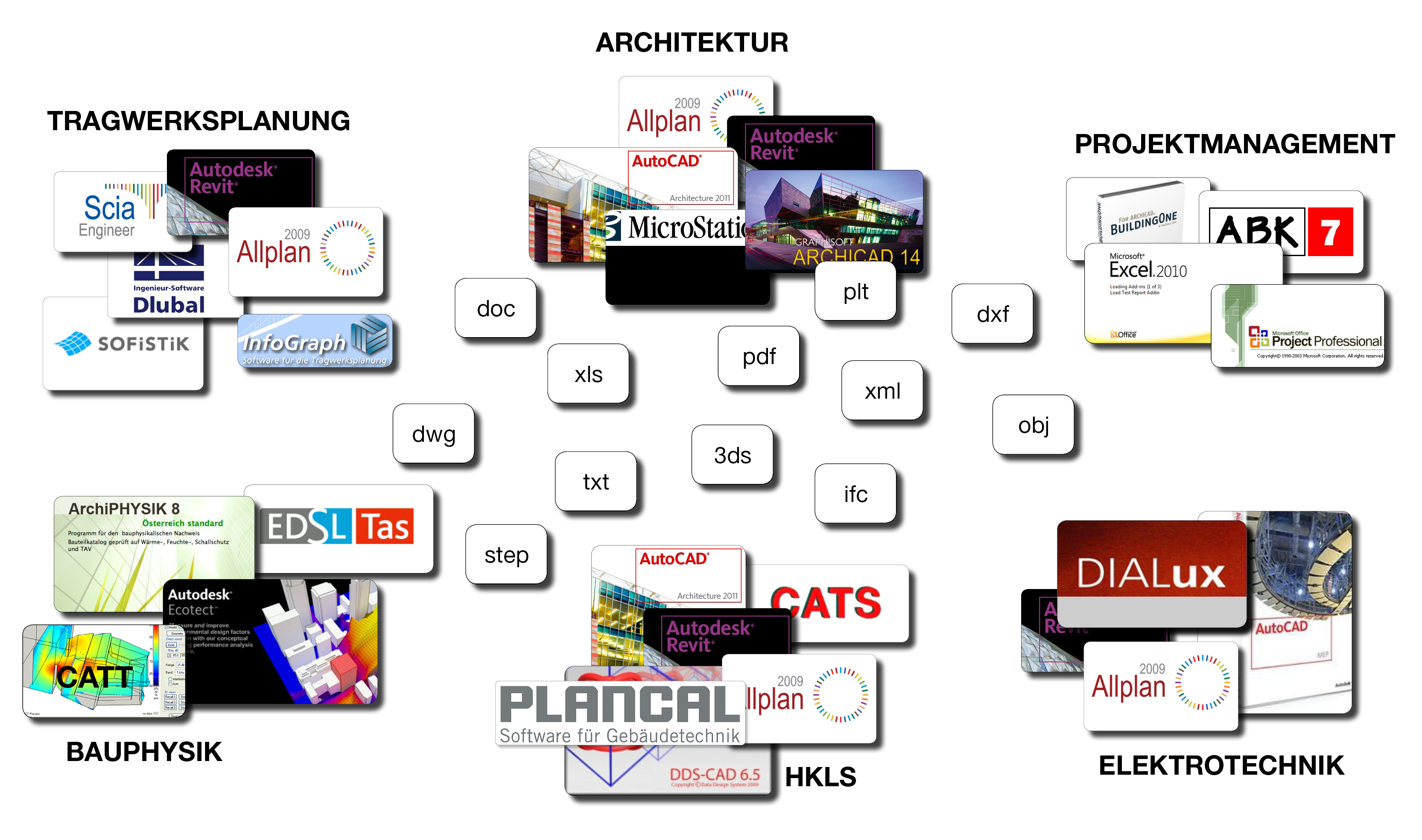
The likelihood of finding a single software program used by everyone in the design teams assembled by the client is therefore negligible. In addition, each firm typically uses its own standards within the software (templates) to optimize its own processes. So even if two or more firms use the same software, this by no means guarantees that seamless workflows can be achieved.
This term describes a scenario in which all designers and, where applicable, the contractors work within the same software. Any interfaces to specialized programs for calculation and simulation (e.g., for structural analysis or building physics) are typically connected to the main software via special plug-ins. At the center is a central drafting software, and all disciplines work in the same data format. This implies, though not necessarily means, that work is actually being done within a single physical model—very often there are many sub-models for the various disciplines and trades, but only one data model to which all components are linked in Closed BIM.
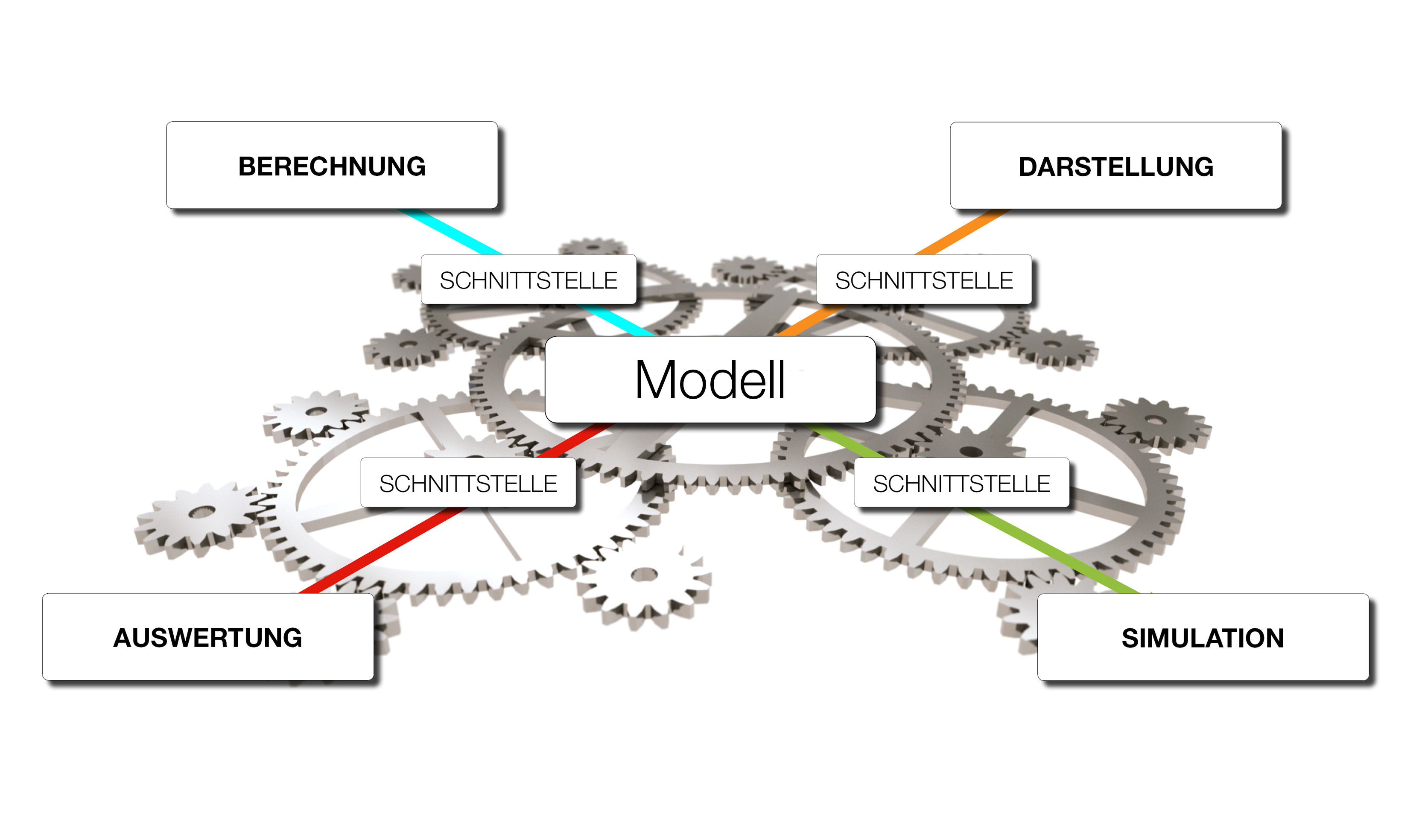
As mentioned at the outset, however, working in the same software does not necessarily mean that standards are tailored to the specific project. Adapting templates from different companies to meet project requirements can be a major challenge and usually involves compromises on all sides. In addition, configuring the interfaces to specialized tools for calculation, simulation, and analysis requires a high level of expertise even in a Closed BIM workflow and presents a constant challenge.
Closed BIM therefore demonstrates its added value most clearly in a general planning scenario: when all disciplines within a company work using the same, coordinated default settings and interface configurations, the benefits of a uniform data structure become apparent, and the workflow can be significantly streamlined compared to an open software environment.
Open BIM now refers to the scenario—much more common in German-speaking countries—where a project involves an open software environment: each design team uses its own software, settings, and workflows. This naturally raises the question of an exchange format that allows this open environment to share BIM data. To put it simply, there is an open data format for this purpose that is used to transfer information, known as the IFC format.
The idea is simple: The standardized data transfer format serves as the core, the interface for data transfer:
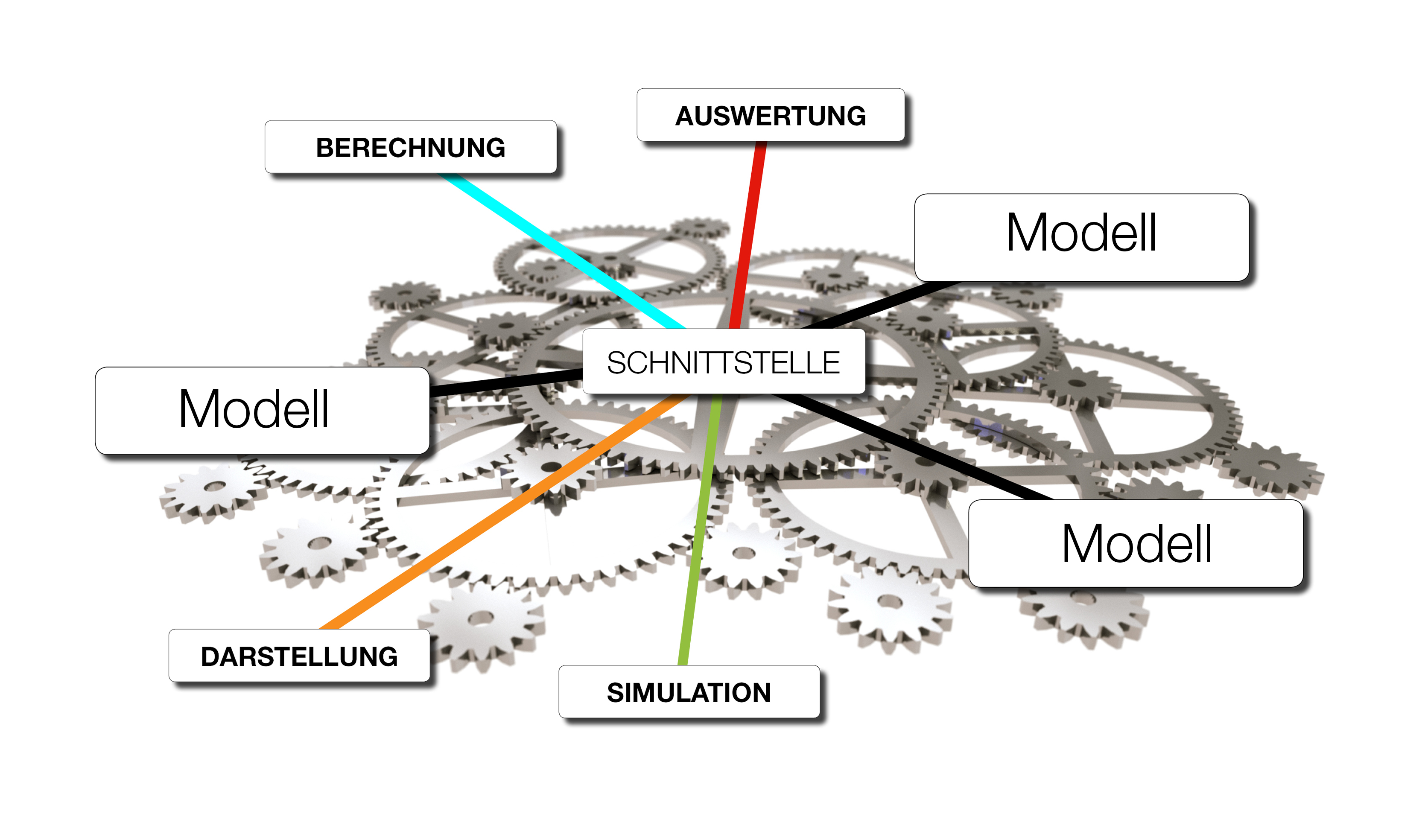
It is easy to imagine that a "universal interface" such as the IFC format has its limitations and is therefore, in many respects, inferior to a uniform data format for all disciplines (such as those found within Revit or Allplan). In addition to the technical challenges, this also raises a number of process-related issues.
Nevertheless, it should be noted that, despite all the questions that remain unanswered, Open BIM reflects the reality of the German-speaking market.