
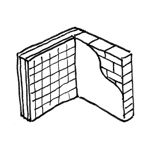
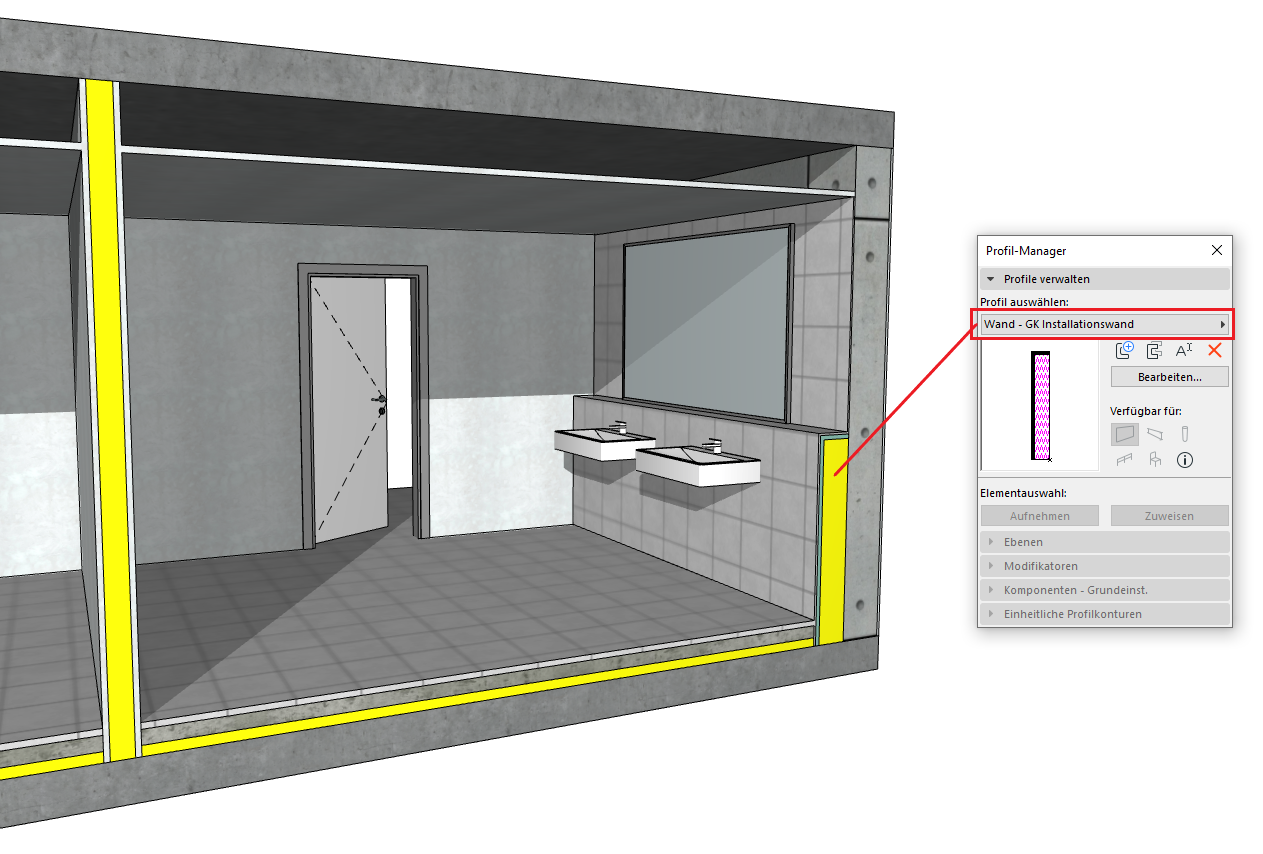
Wall coverings such as plaster, tiles, or paneling are typically modeled using a wall’s surface material property or as part of a multi-layer structure (see Multi-layering). However, there are cases where wall coverings are modeled as separate single layers—for example, when the coverings do not extend to the ceiling, such as tile backsplashes in bathrooms and kitchens.
Information on working with walls in the early planning phases is described in the article "Walls: General Information."
Presentation

Cross-sectional view
Model representation
Features
- U-value
- Sound insulation class
- Total area of wall covering
Outline Information
Labeling
At this stage, the component is not yet labeled or dimensioned in the plan views.
Instructions
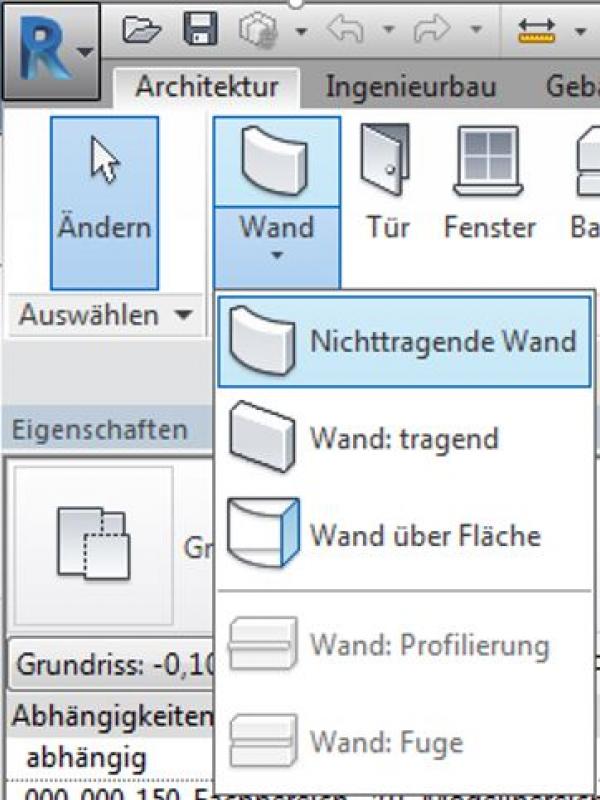
Wall cladding is modeled in Revit using the "Wall: Non-Load-Bearing" system family.
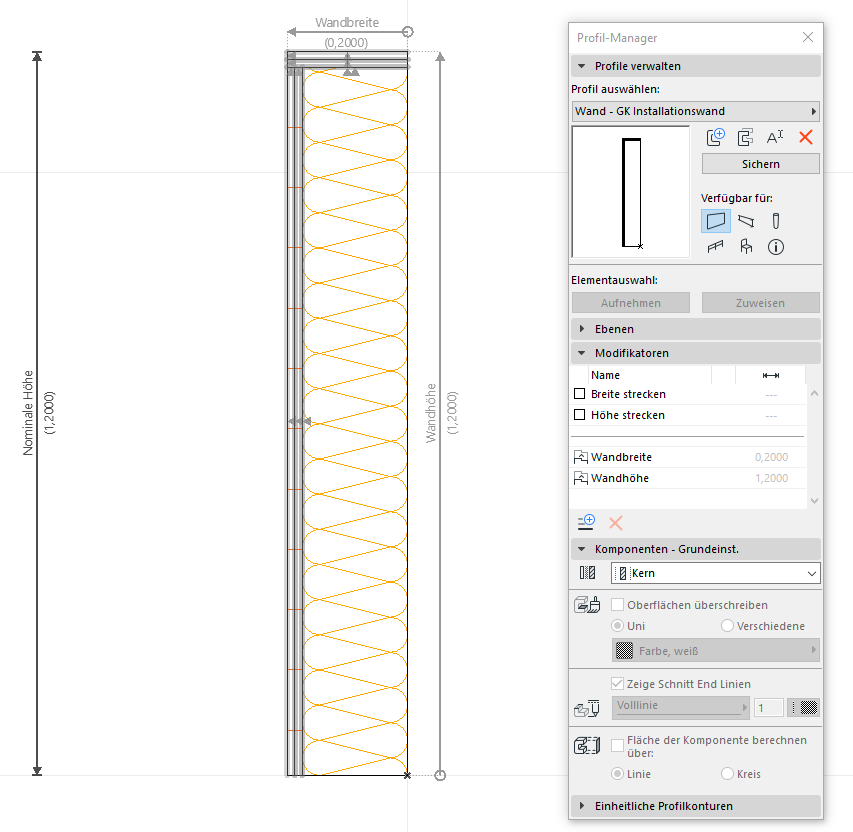
It is recommended that you always select the "Multi-layer" setting (or the "Complex Profile" for structurally more complex structures). For partition walls, it is particularly important to note that under
Categories and Features
Presentation

Cross-sectional view
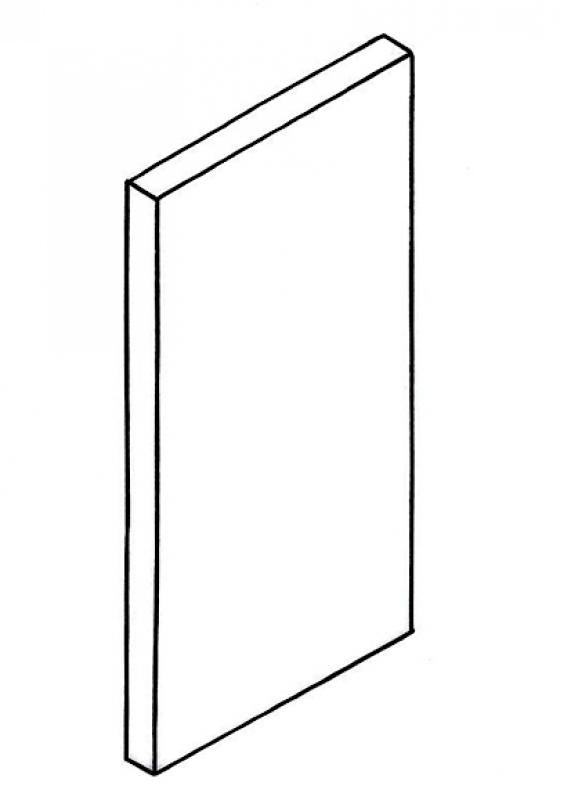
Model representation
Cross-sectional view
Model representation
Cross-sectional view
Model representation
Features
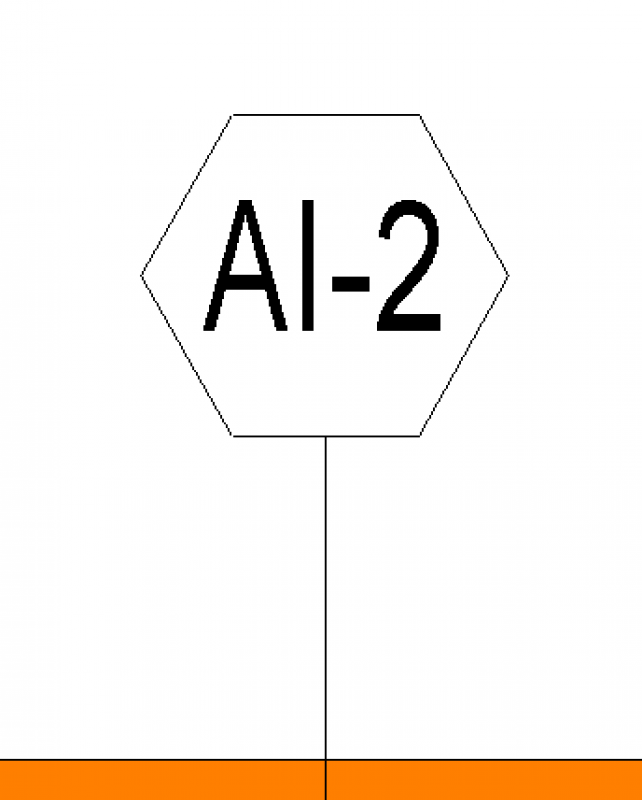
Labeling
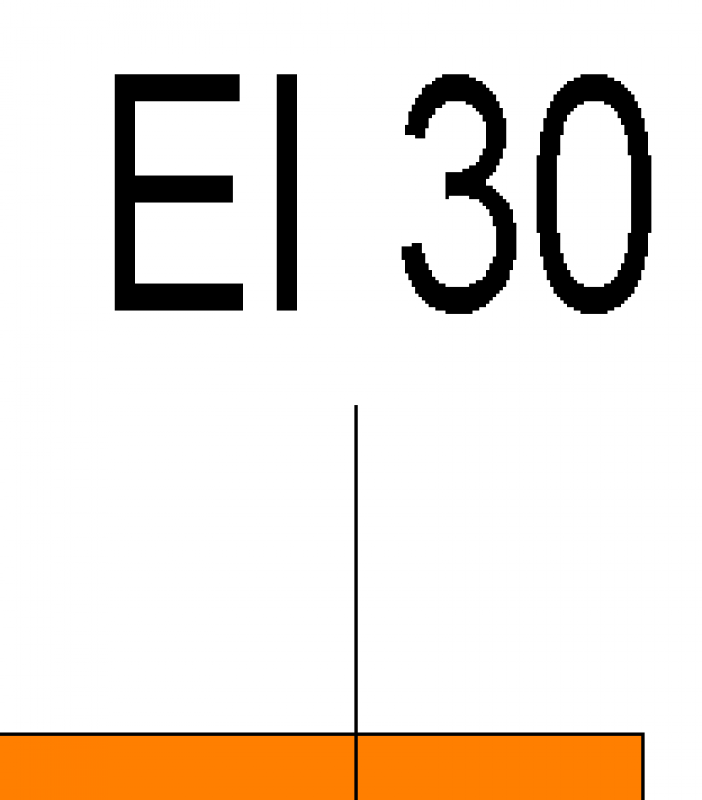
In this phase, the components are labeled on the floor plan with their part numbers as listed in the parts catalog, e.g., AW01 or IW01.
Instructions
Features:
In this phase, the building physics properties are added. These are defined at the type or instance level, depending on the content used.
The new features and parameters for this phase should be added in the appropriate sections of the component's settings dialog.
A description of the settings dialog and the corresponding procedure can be found in the "Wall: General" section, or in an earlier section of this article.
The labeling and dimensioning of the component should always be associative. Instructions on how to do this in ARCHICAD can be found in the relevant Articles.
Presentation
Cut
Model representation
Features
Die Oberfläche und die Zuordnung lt. Baukostengruppe werden in dieser Phase definiert.
Labeling
See Submission.
Instructions
Ideally, the wall should be labeled and dimensioned using a family that retrieves the necessary information from the wall's parameters and properties.
The new features and parameters added for this phase must be entered in the appropriate fields of the component's settings dialog.
A description of the settings dialog and the corresponding procedure can be found in the "Wall: General" section, or in an earlier section of this article.
The labeling and dimensioning of the component should always be done associatively. Instructions on how to do this in ARCHICAD can be found in the relevant articles.
Unfortunately, this content is available only to our Pro users.
If you'd like to read the full article, try the Pro account or become a Pro user.