
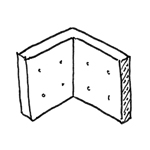
Reinforced concrete walls are a special type of structural wall and are among the most common elements in construction. When reinforced concrete walls are part of multi-layer wall systems—such as insulated exterior walls—the question arises as to how to handle the multi-layered structure.
Reinforced concrete walls are classified as either cast-in-place or precast walls, depending on their construction method.
Search terms: wall, walls
Information on working with walls in the early planning phases is described in the article "Walls: General Information."
Presentation
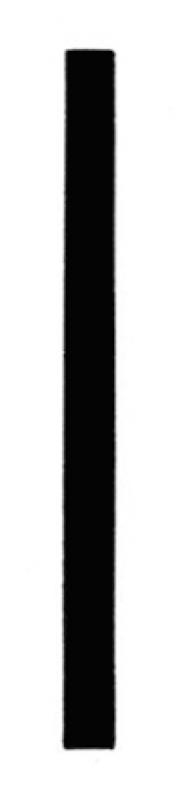
Plan view
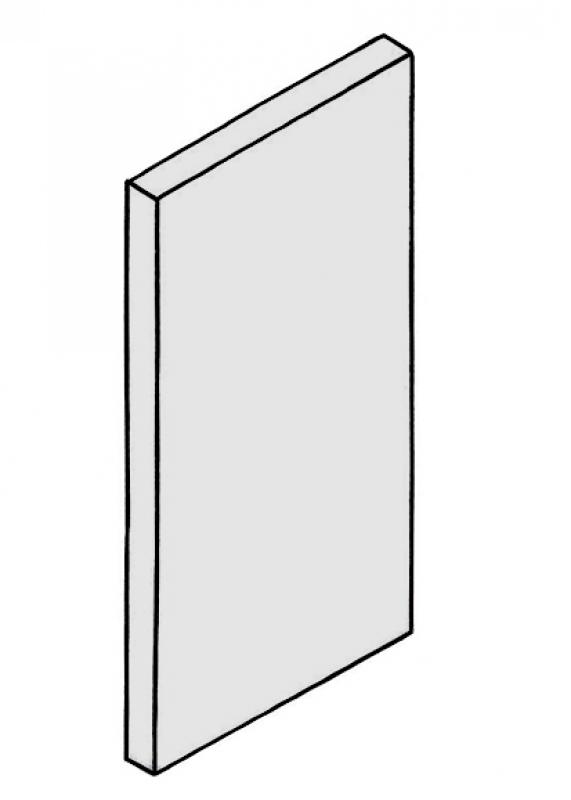
Model representation
Features
- U-value
- Sound insulation class
- Total area of wall covering
Outline Information
Labeling
At this stage, the component is not yet labeled or dimensioned in the plan views.
Instructions
During this phase of the design process, reinforced concrete walls are modeled, which means that the wall is assigned its material. In addition, the wall is supplemented with structural design information.
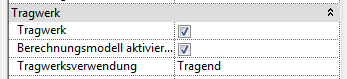
Reinforced concrete walls are load-bearing elements and should always be marked as load-bearing in the Properties window. Optionally, the calculation model can be enabled.
Material assignment
The wall material is defined in the "Edit Type" properties window, in the "Construction" group. The number of layers in a wall construction varies depending on the modeling method.
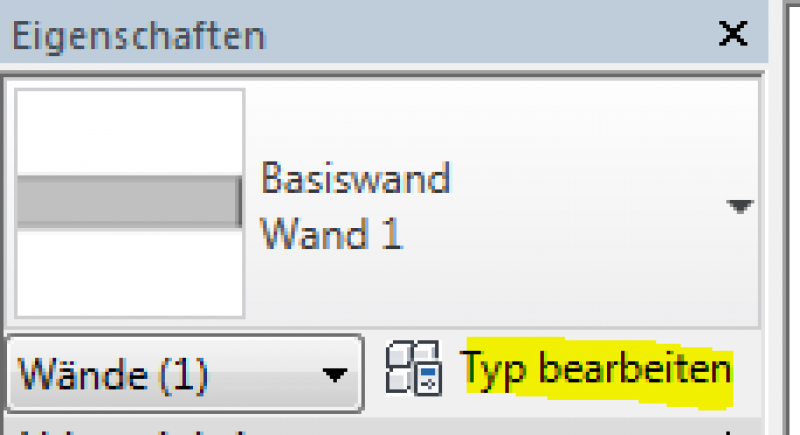
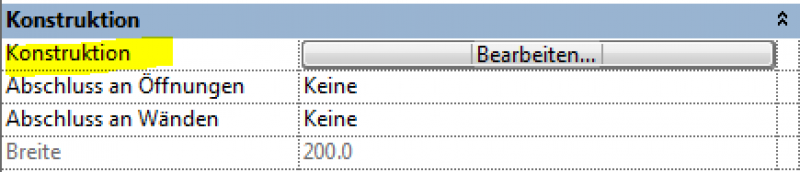
The basic process of modeling a wall in ARCHICAD remains the same across the various design phases—and regardless of the wall type.
Detailed instructions on walls can be found under "Walls: General."
It is recommended that you always select the "Multi-layer" setting (or the "Complex Profile" for structurally more complex structures). For reinforced concrete walls, it is particularly important to set the “Load-bearing function” to “Load-bearing elements” under Categories and Properties, and to set the reinforced concrete material to “Core” in the multi-layer structure. This setting enables the display of the RC wall without its additional layers (e.g., insulation) according to the multi-layer component when using the structural representation “Only the core of the load-bearing elements.” The wall analysis also draws on this information and can display it (along with all other information assigned to the wall).
The use of multi-layer components allows for highly effective centralized control of the building elements: as soon as a structure catalog is available, the multi-layer components can reflect it in the project—if a specific structure changes, this can be updated centrally for all building elements that access it; thus eliminating the risk that individual components will be “overlooked.”
For special structures, we recommend using the complex profiles, e.g., for the parapet.
Presentation
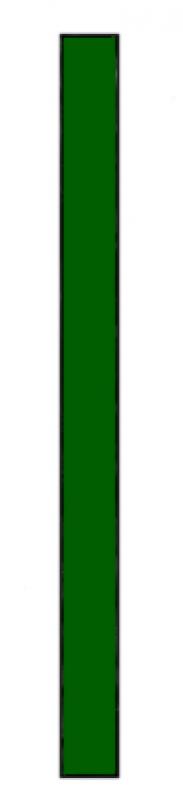
Cross-sectional view
Plan view
Model representation
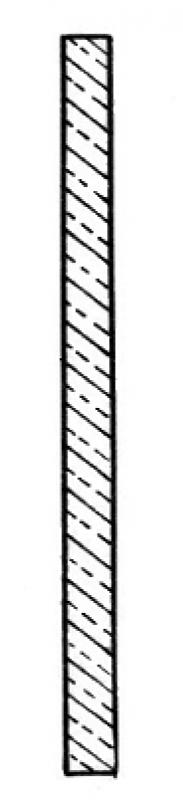
Plan view
Model representation
Plan view
Model representation
Features
Labeling
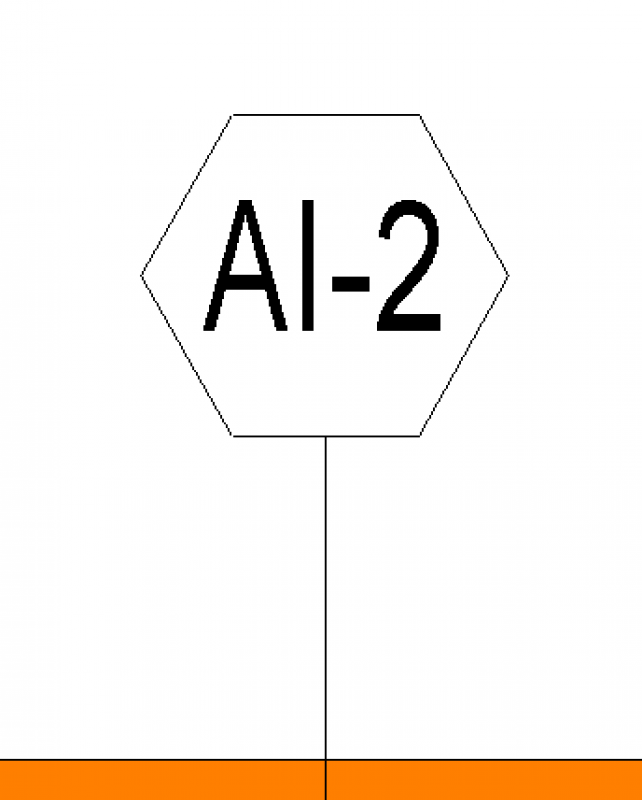
In this phase, the components are labeled on the floor plan with their assembly designations as listed in the parts catalog, e.g., AW01 or IW01.
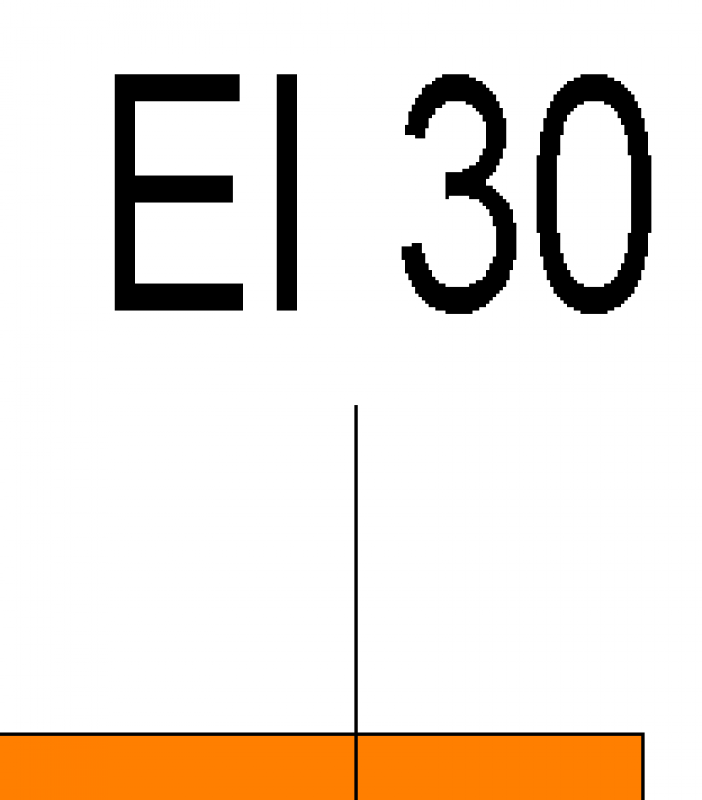
In addition, the wall will be classified according to the specified fire resistance rating (if applicable).
Instructions
The basic process of modeling a wall in ARCHICAD remains the same across the various design phases—and regardless of the wall type.
Detailed instructions on walls can be found under "Walls: General."
It is recommended that you always select the "Multi-layer" setting (or the "Complex Profile" for structurally more complex structures). For reinforced concrete walls, it is particularly important to set the “Load-bearing function” to “Load-bearing elements” under Categories and Properties, and to set the reinforced concrete material to “Core” in the multi-layer structure. This setting enables the display of the RC wall without its additional layers (e.g., insulation) according to the multi-layer component when using the structural representation “Only the core of the load-bearing elements.” The wall analysis also draws on this information and can display it (along with all other information assigned to the wall).
The use of multi-layer components allows for highly effective centralized control of the building elements: as soon as a structure catalog is available, the multi-layer components can reflect it in the project—if a specific structure changes, this can be updated centrally for all building elements that access it; thus eliminating the risk that individual components will be “overlooked.”
For special structures, we recommend using the complex profiles, e.g., for the parapet.
During this phase, all the information required for the contract award (concrete grade, etc.) is added to the reinforced concrete walls. In addition, the structural element is reinforced.
Presentation
Plan view
Model representation
Features
- Gross weight
- Reference
Parameters
- Net weight
- Net area of wall covering
- Thickness of wall covering
Outline Information
Labeling
The component should be labeled in the same way as it was during the submission phase.
Instructions
The information regarding the reinforcement to be used in this phase must be provided by the structural engineering team and incorporated into the wall design.
The basic process of modeling a wall in ARCHICAD remains the same across the various design phases—and regardless of the wall type.
Detailed instructions on walls can be found under "Walls: General."
It is recommended that you always select the "Multi-layer" setting (or the "Complex Profile" for structurally more complex structures). For reinforced concrete walls, it is particularly important to set the “Load-bearing function” to “Load-bearing elements” under Categories and Properties, and to set the reinforced concrete material to “Core” in the multi-layer structure. This setting enables the display of the RC wall without its additional layers (e.g., insulation) according to the multi-layer component when using the structural representation “Only the core of the load-bearing elements.” The wall analysis also draws on this information and can display it (along with all other information assigned to the wall).
The use of multi-layer components allows for highly effective centralized control of the building elements: as soon as a structure catalog is available, the multi-layer components can reflect it in the project—if a particular structure changes, this can be updated centrally for all building elements that access it; thus eliminating the risk that individual components will be “overlooked.”
For special structures, we recommend using the complex profiles, e.g., for the parapet.

Unfortunately, this content is available only to our Pro users.
If you'd like to read the full article, try the Pro account or become a Pro user.