

The term "BIM coordination" encompasses various areas of responsibility that govern the content and quality of digital building models at the project level.
BIM coordination can take place at various levels. Coordination tasks within a specific discipline are referred to as BIM discipline coordination, while coordination across disciplines is referred to as overall BIM coordination.
The BIM Execution Plan serves as the foundation for BIM coordination within a project. Essentially, the task of BIM coordination consists of reviewing and verifying the specifications of this BIM execution plan and communicating and coordinating any issues that arise. The coordination model provides the data foundation for this, utilizing processes and methods of model-based quality management and model-based communication.
BIM discipline coordination ensures the completeness and quality of digital building models within a specific discipline (such as architecture, structural engineering, building services engineering, etc.).
It is typically organized within the planning project teams and carried out regularly by advanced users. Common tools used for this purpose include:
- Internal error logs of the authoring software
- Check views and lists in the respective templates
- Collision detection solutions (e.g., Navisworks, Tekla BIM Sight, etc.)
- Advanced verification tools (such as Solibri Model Checker)
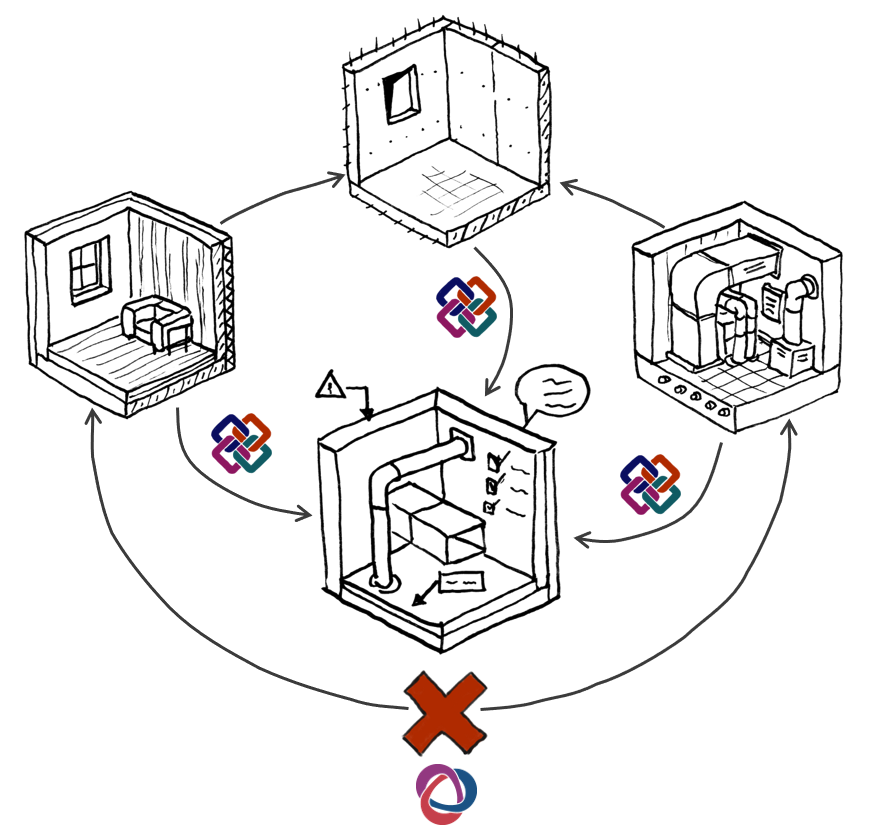
Depending on the contracting scenario, this task is either handled by general planners during the design phase and general contractors during the construction phase (or subcontracted to experts). Less commonly, building owners also directly commission their own companies (e.g., at the project management level) to do so. Common tools for this include:
- Advanced validation tools (such as Solibri Model Checker)
- Issue management platforms such as Autodesk Forma, Trimble Connect, Kubus BIM Collab, etc.
In practice, general planners often handle overall BIM coordination during the design phase, while general contractors handle overall BIM coordination during the construction phase. In cases where planning and construction are contracted out separately, overall BIM coordination is either entrusted to individual project participants (such as the architects) or contracted out separately to specialized firms.
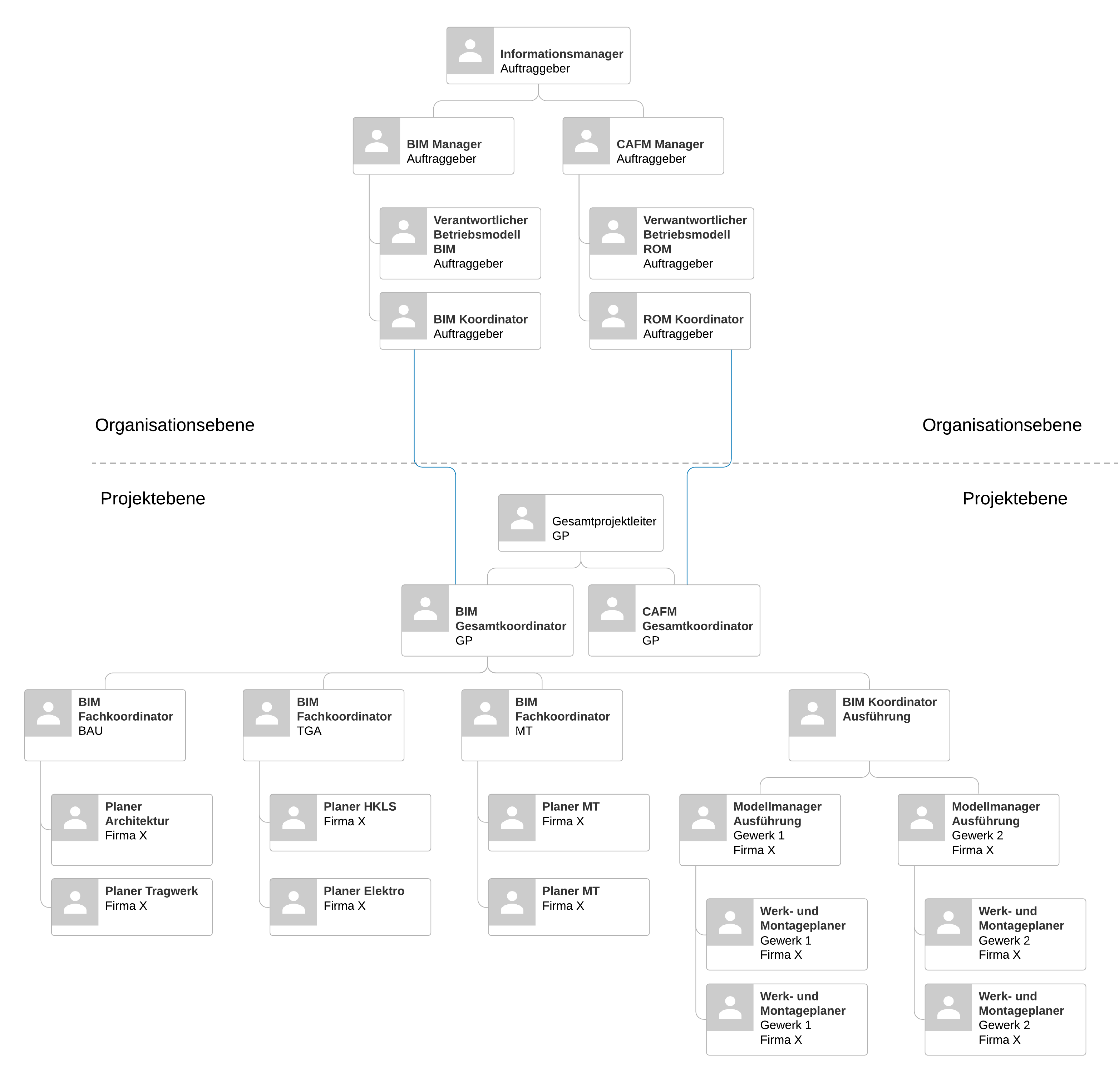
In particular, if the data from planning and execution is to be reused in operations, additional coordinators may be needed to ensure the smooth transfer of data into facility management systems (CAFM—Computer-Aided Facility Management).
The figure illustrates a possible scenario involving the interaction of various coordination tasks:
Challenges
Since separate contracts are very common in the planning phase, coordinating disciplines that share building elements poses a particular challenge. For example, structural columns must be carefully considered by both the architectural and structural engineering teams. But elements that have electrical or water connections also frequently involve multiple disciplines—such as restrooms, motorized fire dampers, escalators, and many others.
As a result, technical coordination is often expanded and centralized by a single company to cover multiple sub-models—for example, technical coordination for building construction (architecture + structural engineering) and technical coordination for building services (electrical, HVAC, and measurement and control systems).
Particularly challenging are elements that affect all disciplines—primarily openings and outlets such as cutouts and slots. These can generally only be effectively coordinated at the level of overall planning.