
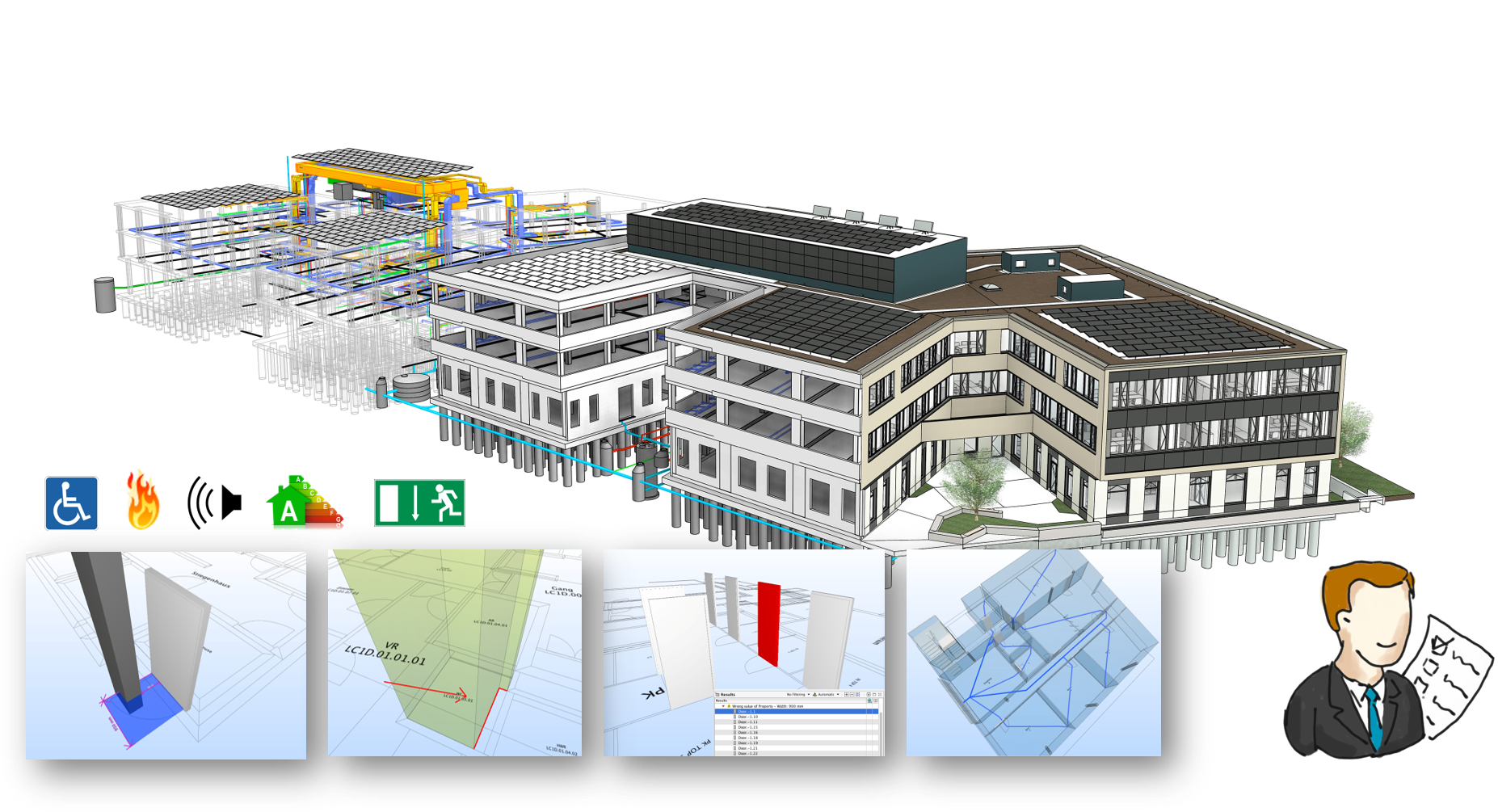
In the BIM workflow, model-based quality management refers to the methods and processes used to ensure the content, structural, geometric, and technical quality of a digital building model. Quality management is a component of BIM coordination.
The methods range from simple geometric collision checks within a model or between different submodels to comprehensive attribute-based checks and their dependencies.
Model-based communication methods are used to coordinate and communicate any test results.
Among the top priorities are:
- Ensuring a predefined, standardized model quality, which is essential for the standardized handover and automated evaluation of models.
- Ensuring compliance with modeling guidelines and information content per project phase (are all elements present, sufficiently detailed, and described via attributes?
- Avoiding obvious geometric conflicts, which pose a high risk of errors during construction or quantity takeoff.
- Ensuring sufficient space in front of or next to elements such as doors, sanitary fixtures, access panels, etc. (maintenance accessibility, installation accessibility, accessibility for people with disabilities, ease of opening).
- Ensuring sufficient model performance. In particular, program-internal warnings (e.g., in Revit) can sometimes lead to significant performance losses and may significantly disrupt the project workflow, potentially causing project crashes.
- Ensuring the accuracy and completeness of the alphanumeric descriptions of all model components per project phase (e.g., standard-compliant designation of a wall’s fire protection in the design phase)
BIM quality management requires a consistent structure, a standardized terminology, and a clear division of roles and responsibilities. Only in this way can errors be reliably identified, efficiently communicated, and resolved.
The figure shows quality management as an integral part of the control loop in digital project or company setups:
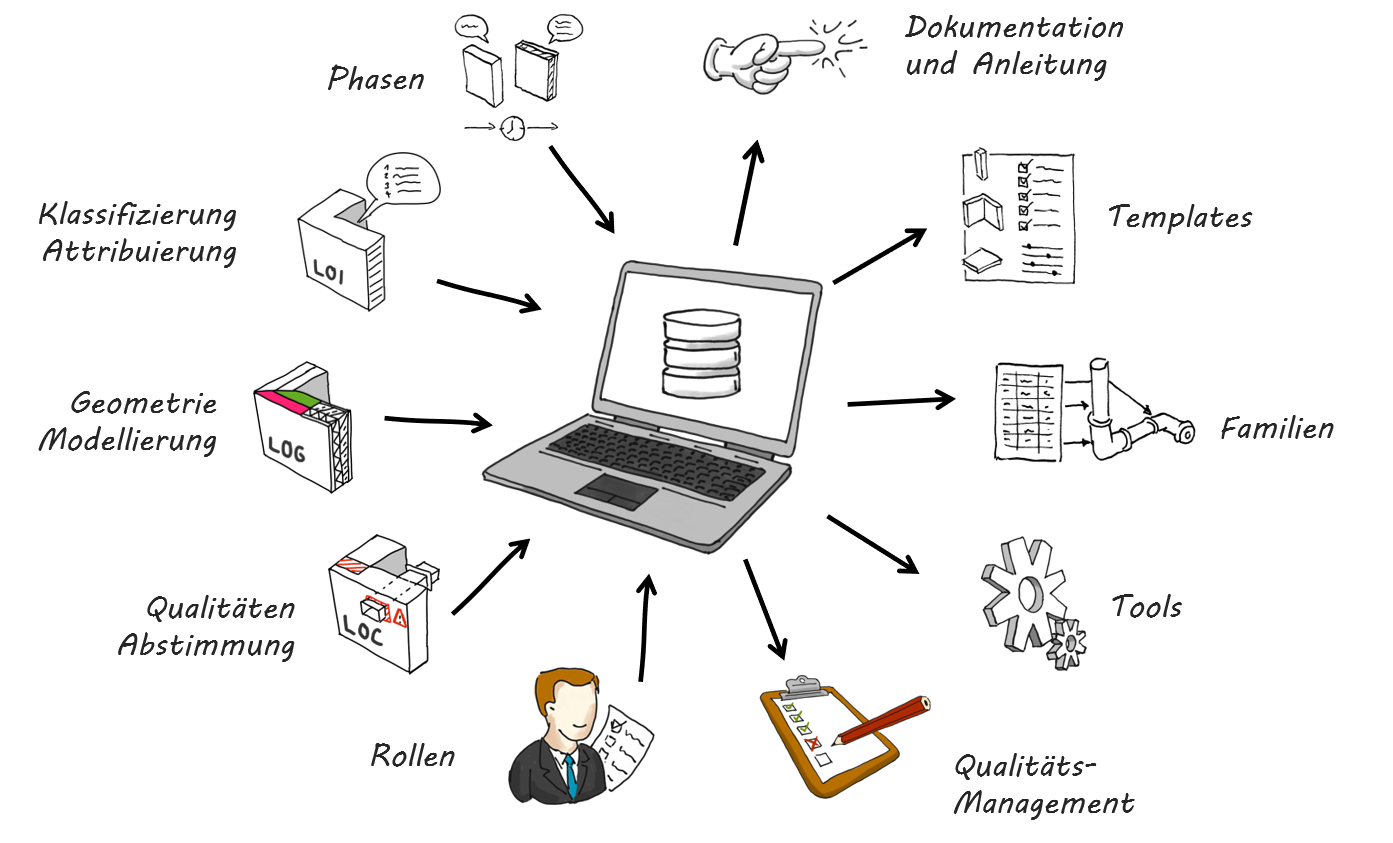
The more comprehensively the requirements (left side) of a company or project standard are documented, the easier it is to incorporate them into the settings of the authoring tools (right side) and to define quality management rules.
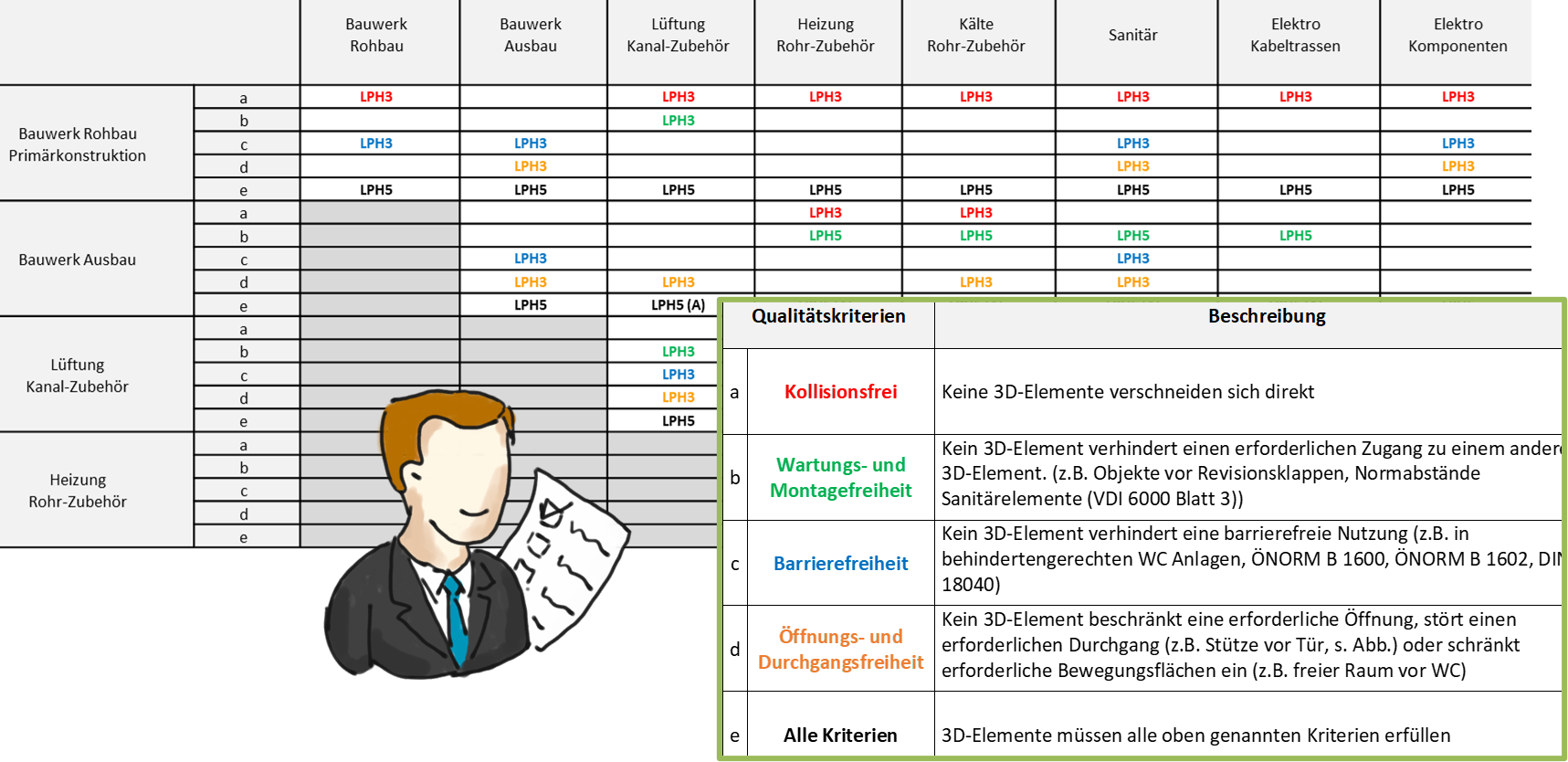
Quality gates refer to the target quality standards and content of a digital building model at a specific point in its lifecycle. An example of this is permissible clashes in certain design phases: For instance, clashes between architectural and HVAC components are often tolerated in the preliminary design phase, but not in the construction design phase.
Such specifications are typically defined in BIM implementation plans, depending on the project requirements.
In particular, a matrix format is often chosen to represent the required geometric qualities, illustrating the various disciplines or trades in relation to time:
There are a wide variety of software solutions available on the market for model-based quality management. Their functional scope ranges from simple algorithms for geometric collision detection to database-driven error analysis and comprehensive, rule-based inspections.
Recent approaches aim to go beyond simply testing models to gain a comprehensive overview of all errors that occur within a company, thereby enabling conclusions to be drawn regarding training needs and the need to adjust standards for algorithmic quick checks.