

Pipe insulation is essential for preserving the energy of the fluid inside the pipes. To minimize temperature drop or energy loss in the processed fluid as it travels from the source to the end user, different insulation materials are used depending on the specific application.
At this stage, the insulation of pipes is not yet shown.
At this stage, the insulation of pipes is not yet shown.
In this phase, the insulation is shown for the first time.
Presentation
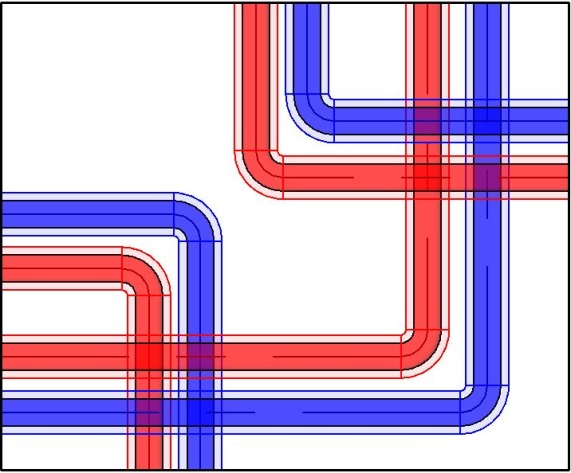
Plan view
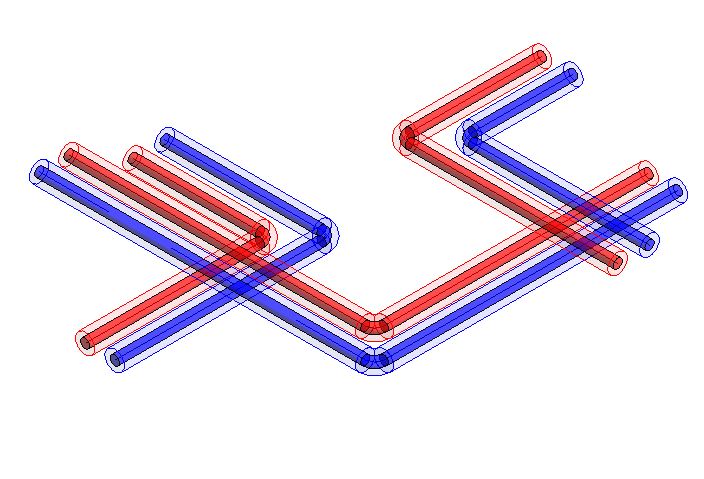
Model representation
Features
The following characteristics are defined in this phase:
- Geometry of Fire Protection Cladding
- Loads
- Definition of the fire resistance class
To prevent spacing and clearance issues, only pre-sized main lines will be insulated for the time being.
For more information on sizing, see the article "Pipe Network Calculation."
Labeling
In this phase, the component is not labeled in the plan view.
Instructions
Installation of the insulation:
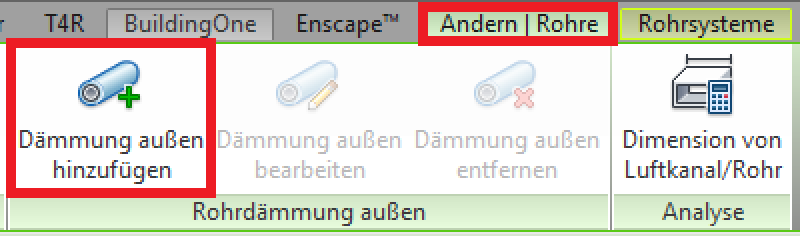
After selecting the pipe, click the button in the "Edit | Pipes" tab to create the insulation.
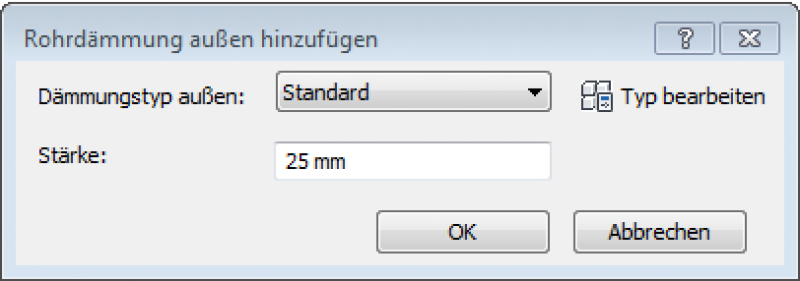
The type of exterior insulation and its thickness can be specified according to requirements.
In this phase, the plans and models of the insulation remain unchanged from those created during the design phase.
Presentation
In this phase, the plans and models of the insulation remain unchanged from those created during the design phase.
Features
The following characteristics must be defined in this phase:
- Adjustment of the geometry of the fire protection cladding in accordance with the piping network calculation
- Adjustment of the geometry of the pipe insulation
Labeling
The labeling of the insulation layer or cladding on the floor plan should include the following fire safety requirements:
- Fire resistance class
- Insulation thickness
Instructions
Generally, the insulation—including the material, thickness, etc.—is described in more detail in the bid specifications.

Unfortunately, this content is available only to our Pro users.
If you'd like to read the full article, try the Pro account or become a Pro user.